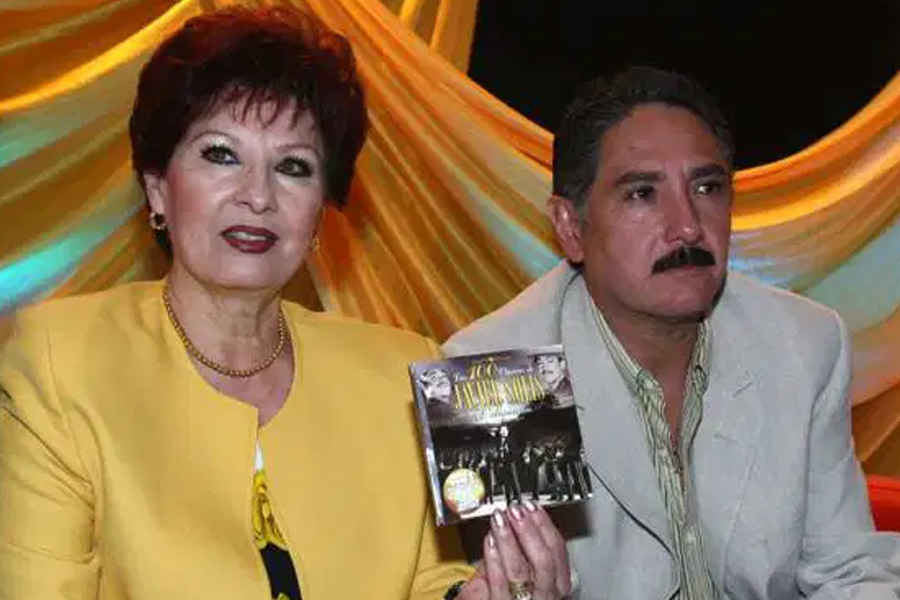
A life lived close to music and memory
My journey through Blanca Estela Saenz’s life seems like going through a vinyl record corridor. Every step hums. Every wall echoes.
She is not remembered as a politician, executive, or headliner. I remember her as calmer and more intimate. She stood beside an era-defining voice. Dancer in love with singer. The partner who later held his memories like a torch.
Most people discover her name from Javier Solís, a renowned bolero ranchero interpreter in Mexico. However, interviews and memories reveal Blanca Estela Saenz as more than “the widow.” She witnesses history. A mother. Keeper of family tales.
I write in the first person about her to make the story feel lived in, not catalogued.
Early years and the moment everything changed
Birth and childhood details of Blanca Estela Saenz are unknown. Dates and schools are not clearly listed. Instead, her life is almost cinematically highlighted in the 1950s.
A Mexico City theater dressing room comes to mind. Airborne powder. Wooden floorboards and shoes tapping. Her dance career was part of the bustling variety show and live music stage scene. In that world, she met Javier Solís.
He climbed swiftly. Radio hits. Packed venues. Onscreen roles. Time-bending climb.
Most accounts place their meeting backstage during concerts. Working artists meet. The relationship evolved from a simple start to support Solís during his most prolific years.
From the early 1960s, they were more than colleagues. A couple built a home while the public saw just stage lights.
Then came the rock-solid date.
April 19, 1966.
At 34 years old, Javier Solís passed away due to surgical complications. His demise startled Mexican and international fans. Losing wasn’t news to Blanca Estela. Personal, urgent, heartbreaking.
She went from lover to widow, from friend to reluctant public figure in an instant.
Life after loss and the role of memory keeper
Grief can hollow a person out. It can also carve them into something strong.
From what I have observed, Blanca Estela Saenz chose strength.
Rather than disappear completely, she slowly stepped into the role of protector of Solís’ legacy. She attended anniversary events. She spoke at presentations of remastered albums. She granted interviews where she corrected rumors and told stories only someone close could tell.
I think of her as an archivist of emotion.
She remembered the small details: rehearsals, late nights, family meals, the human side of a man the public treated like a monument. When she spoke, the legend shrank to human size. He became a husband, a father, a man who laughed.
That perspective matters. Without it, fame turns people into statues.
Family members and personal relationships
Family is the center of Blanca Estela Saenz’s story. Even when public attention focused on Javier Solís, her language in interviews kept returning to home, children, and daily life.
Below is a clear look at the relationships most often connected to her.
Javier Solís, partner and life companion
He was her partner during the height of his career and remains the figure most closely linked to her name. Their relationship shaped her public identity. After his death, she was widely recognized as his widow and spokesperson for his memory.
Their bond appears to have been built not only on romance but on shared work and mutual understanding of stage life.
Her children
In interviews, Blanca Estela has stated directly that she is the mother of children with Javier Solís. She speaks of them with protectiveness and pride.
Different accounts list names such as Gabriel and Gabriela among Solís’ descendants. What stands out to me is not the exact spelling of names but the way she frames motherhood. She does not talk about celebrity households. She talks about raising kids, about stability, about trying to give them a normal life while their father’s voice played everywhere.
I sense a balancing act.
Outside, the world celebrated a star. Inside, she packed lunches and kept routines.
Extended family and later generations
Over time, grandchildren and relatives appear at commemorations and memorial visits. Family gatherings, cemetery tributes, and anniversaries bring them together. These moments feel less like public events and more like reunions.
The family has often acted as a small circle that protects Solís’ image and manages how his memory is shared.
To me, this suggests that Blanca Estela’s influence extends beyond her own life. She helped shape how future generations remember their history.
Career and work beyond the spotlight
Blanca Estela Saenz is not known for a long independent public career. Her early work as a dancer placed her on stage, but not at the center of the marquee.
Later, her work became something subtler.
She appeared in interviews, documentaries, and special programs. She participated in projects that preserved recordings and celebrated anniversaries. In a practical sense, this is legacy work. In an emotional sense, it is caretaking.
If Javier Solís built the house of music, Blanca Estela kept the lights on.
Timeline of key moments
| Year | Event |
|---|---|
| 1950s | Works as a dancer and meets Javier Solís |
| Early 1960s | Relationship deepens, family life forms |
| 1966 | Death of Javier Solís |
| Following decades | Public appearances, interviews, and commemorations |
| 2010s and 2020s | Participation in legacy events and media features |
Looking at the dates, I see a life divided into two acts: before 1966 and after 1966.
The second act is longer. Quieter. Enduring.
Personal reflection on her presence
When I watch Blanca Estela speak, I notice something simple. She does not perform. She remembers.
Her voice is steady. Her sentences are direct. There is no drama, only recollection.
Some people chase fame. Others inherit it and learn how to carry it without letting it crush them.
She seems to belong to the second group.
Her life feels like a lamp placed beside a photograph. Not flashy, but constant.
FAQ
Who is Blanca Estela Saenz most widely known for being connected to?
She is most widely recognized as the partner and widow of Javier Solís, the Mexican singer whose boleros and rancheras became classics. Her public identity grew from that relationship and from her later role preserving his memory.
What was her early profession?
She worked as a dancer in theater and live performance settings. That artistic environment is where she first met Solís.
Did she have children with Javier Solís?
Yes. In interviews she has stated that she is the mother of children with him and has spoken about raising them and protecting their privacy.
Did Blanca Estela Saenz pursue a separate public career?
She did not build a major independent celebrity career. Instead, she focused on family life and later on representing and protecting Solís’ legacy through interviews and commemorative events.
Why does her story remain relevant today?
Her story offers the human side of fame. Through her memories, we see the private world behind a public icon. She keeps the past alive not through spectacle but through testimony, and that quiet preservation continues to resonate.