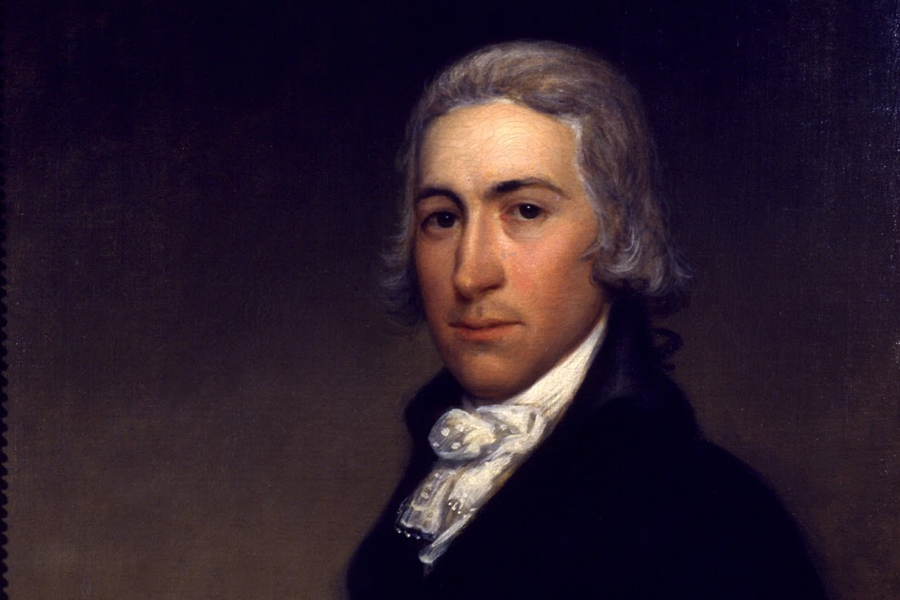
A young heir in an old house
No battle or marble statue come to mind when I think of John Bradstreet Schuyler. There are keys, a ledger book, and a big porch overlooking green sea-like meadows.
He lived only 30 years, 1765–1795. However, he was the center of a powerful early New York family. A peaceful passage in a grand house describes his life. People surrounding him thundered. He prevented roof leaks.
John, the oldest son of Philip Schuyler and Catherine Van Rensselaer Schuyler, was raised in a political, land, and ambitious family. Expectation hung over him from the start. He was prepared for stewardship, not spectacle, as the heir.
At 22, he managed Saratoga in 1787. He received the house, furnishings, farms, and issues from his father. That moment comes to mind. No coronation. It felt like iron in his hands.
The father who shaped the field
To understand John, I have to begin with Philip.
Philip Schuyler was a general of the Revolution, a senator, a land baron. His properties included thousands of acres, mills, tenant farms, and businesses scattered across the Hudson Valley. He built, lost, rebuilt. Fire destroyed one home and he raised another. Politics carried him to the capital, but the earth always pulled him back.
John grew up inside that machinery. While others might inherit a single farm, he inherited a small economic ecosystem.
In 1787 Philip eased away from daily supervision and gave John control of the Saratoga patent and the Schuyler House. It was both a gift and a test. The message was simple. Run it well.
The mother who anchored the household
Catherine Van Rensselaer Schuyler designed emotions.
The marriage of Philip and Catherine already linked two dynasties because she was from the strong Van Rensselaer patroon family. Her huge, clean house was full of guests. Kids, cousins, letters, politics. It must have sounded like a bazaar at breakfast.
John inherited networks and property from her. Kinship was money. A marriage could forge a bond better than a treaty.
The sisters who filled the stage
Angelica
Angelica Schuyler Church moved in international circles. London. Paris. Diplomats and salons. When I read about her, I feel the air change. She was quick, witty, cosmopolitan. Her letters sparkle. She carried the family name overseas like a banner.
Elizabeth
Elizabeth Schuyler Hamilton married Alexander Hamilton, which tied the Schuylers directly to the forming United States government. Through her, the family entered national memory. Orphanages, charity, resilience. She is often remembered as the heart.
Peggy
Margarita Schuyler, known as Peggy, married Stephen Van Rensselaer III. That union fused two great Hudson River fortunes. Land met land. Influence met influence.
When I line up these sisters beside John, the contrast is sharp. They are lightning bolts. He is steady rain.
Marriage and private life
Strategic kinship also shaped John’s marriage.
He married patroon-related Elizabeth Van Rensselaer in September 1787. Their wedding virtually matched his estate management appointment. He married and ran the house in one season.
The Schuyler House housed housekeeping staff, tenants, and at least one surviving kid. I imagine chambers with account books, nursery melodies, and mill grain dust. Business and home overlapped.
Elizabeth outlived him by decades. In her long story, his life was brief.
Work, numbers, and daily authority
John’s career was not glamorous, but it was essential.
He managed farms. Collected rents. Supervised milling. Maintained roads. Settled disputes. The work reads like a list of chores, yet each task fed dozens of families and sustained the Schuyler fortune.
Around 1790 he also served locally as a commissioner of highways and a justice of the peace. These roles tell me that neighbors trusted him. He was not merely a landlord. He was a civic presence.
I like to imagine his day in numbers:
| Year | Age | Role |
|---|---|---|
| 1765 | 0 | Born into Schuyler family |
| 1787 | 22 | Takes control of Saratoga estate, marries Elizabeth |
| 1790 | 25 | Serves in local civic offices |
| 1795 | 30 | Dies after short illness |
Short, efficient, almost abrupt. The table feels like a thin spine for a life that must have felt much larger from the inside.
A household shaped by the era
Any honest portrait must acknowledge the labor system of the time. Large Hudson Valley estates often relied on enslaved people as well as tenant farmers and hired hands. The Schuyler properties were no exception. The prosperity that John managed rested on the backs of many whose names rarely entered the record.
When I think about that, the house seems heavier. Every beam carries more than timber. It carries history.
The sudden end
In August 1795 John died after a brief illness. Some records list one day, others another, but the fact remains the same. He was gone at about thirty.
With his death, management of the estate returned to his father. The keys changed hands again. The experiment ended. His widow remained. His child remained. The house kept standing.
His life feels like a candle that burned fast and straight. No dramatic flare. Just steady light, then darkness.
FAQ
Who was John Bradstreet Schuyler?
He was the eldest surviving son of Philip Schuyler, born in 1765, who managed the Saratoga family estate and lived at the Schuyler House until his death in 1795.
How was he connected to the famous Schuyler sisters?
He was their brother. Angelica Church, Elizabeth Hamilton, and Peggy Van Rensselaer were his sisters, linking him to diplomatic, political, and landed elite circles.
What did he actually do for work?
He oversaw farms, mills, tenants, and finances on the family’s large properties. He also served locally as a justice of the peace and commissioner of highways.
Who did he marry?
He married Elizabeth Van Rensselaer in 1787, strengthening ties between the Schuyler and Van Rensselaer families.
Why is he less well known than his siblings?
His life was local rather than national, focused on estate management rather than politics or international society. His early death at about thirty also limited his historical footprint.