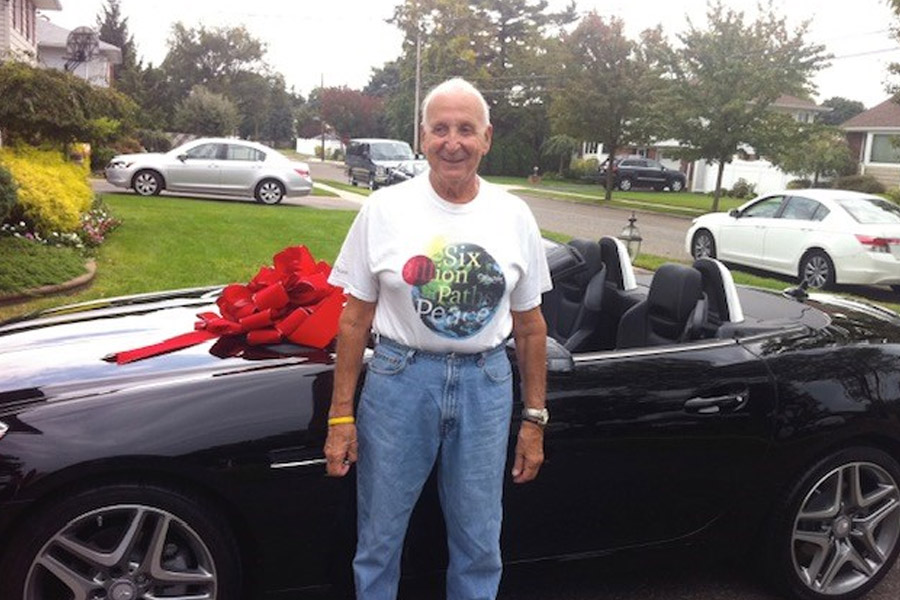
A short portrait of a private man
I write about a man whose name appears most often as a family anchor rather than a headline. Stanley Guttenberg lived a life built from simple, steady pieces: military service, public duty, technical work, and a household that grew into a small chorus of children. He was the kind of father who taught by example, who measured success not in awards but in the steady presence at birthdays, in the way he responded when illness arrived. I saw him through the stories his children told, through dates and numbers that mark key moments, and through the kind of stubborn dignity that stays with a family long after the daily chores end.
Family and personal relationships
Steve Guttenberg
Steve is the most public member of the family. Born on 24 August 1958, he became an actor, author, and son who later stepped into the role of caregiver. I have read and heard the small, tender details he offered about his father. Those details sketch the private man into relief: the late nights of tending a parent, the practical lessons in resilience, the shock of illness that redraws priorities. Steve’s public career means many people know his name, yet his descriptions of his father keep the elder man humble and human.
Ann Guttenberg
Ann was Stanley’s partner and the mother who kept a household together. She appears in the family narrative as a surgical assistant and as the steady hand behind family logistics. The marriage and the daily routines they shared created a domestic architecture: routines, rules, and the small rituals that shape children. I notice how much of an individual’s life is preserved in those quiet domestic facts.
Susan Guttenberg
Susan stands out in the caregiving chapter. She trained alongside her brother to help care for their father in the final stretch of his life. That choice says something about the family ethic: hands-on care, learning new skills in adulthood, making the household into a site of medical labor when necessary. To me, Susan’s decision reads like a promise kept.
Judi Guttenberg
Judi is mentioned less in public records but is part of the sibling constellation that defined Stanley’s life. Sisters and brothers create a social web around a parent, and Judi’s place in that web is part of what kept the family whole. Family pictures, brief recollections, the shared memory of holidays all point to her presence.
Career and work achievements
Stanley’s career resembles a midcentury American biography. After the military, he worked in city police and technical trades. I imagine that arc as a ladder with wide rungs: service, civic responsibility, and technical craft. His attire and work shirt showed expertise.
He joined the Army as a youth. New York Police Department employed him later. After military duty, he worked in electronics and technology. At least three times, he changed jobs and learned new trades: soldier, policeman, technician. From his initial contribution to family caregiving, he spent 60 or more years as an adult.
Financial information on Stanley is scant. He has no stated earnings as an executive. I keep his finances private: consistent salaries, limited assets typical of a working family, medical costs that needed adaptation and sacrifice. His family valued dates, dialysis treatments, and training hours for life-saving home dialysis.
The caregiving chapter: illness, training, adaptation
Illness struck many families. Clinic visits, machine cycles, and training modules changed with kidney failure. To provide intimate, home-based dialysis care, Steve and Susan learned techniques, procedures, and lay medical work. The ordinary heroism of ordinary people becoming technicians, changing their kitchens and spare rooms into care areas, and counting treatment hours like beads on a string is remarkable.
Numerous weekly dialysis sessions, months of training, and years of caregiving that reoriented family calendars important. The medical chronology rescheduled holidays and birthdays. It changed family meaning measurement.
Timeline of key moments
| Year or Date | Event |
|---|---|
| early 1930s | Birth of Stanley, reported dates vary |
| 17 March 1958 | Marriage to Ann, approximate domestic anchor |
| 24 August 1958 | Birth of son Steve |
| 1960s | Family moved from borough life to suburban living |
| 1970s – 2000s | Career phases: NYPD, technical work, family life |
| 2018 – 2024 | Period of serious kidney illness and family caregiving; training to provide dialysis at home |
| 2022 – 2024 | Reports of passing vary by record; family memories persist |
I include approximate years because public records and family accounts sometimes use different dates. The life that matters is the sequence: service, family building, quiet labor, illness, hands-on care.
Personal notes I carry
I imagine Stanley in a small, sunlit kitchen, a radio on the counter, a cup of coffee cooling as a parent presses a child to do one more practice scene, one more algebra problem, one more small moral drill. He is a composite of the details family members shared: veteran, policeman, technician, father. The most vivid image I keep is not an official award or a business card. It is a man who taught reliability, the kind of person who shows up and keeps showing up.
FAQ
Who was Stanley Guttenberg?
He was a father, a veteran, a city officer, and a technical worker. Above all he was a private man who became publicly known because his children, especially his son, spoke openly about caregiving, illness, and family obligations.
Who are his closest family members?
His spouse Ann, and children including Steve, Susan, and Judi. Those names define a household that extended across decades, a family that adjusted roles as needs changed.
What did he do for a living?
He served in the U.S. Army in his youth, worked with the New York Police Department, and later applied practical skills in electronics and technical trades. His life was a patchwork of public service and practical labor.
What happened during his final years?
He experienced kidney failure and required dialysis. Family members trained to provide much of the care at home, changing their careers, learning medical procedures, and committing time measured in sessions and cycles rather than in office hours.
Are the exact dates of birth and death settled?
No single date is uncontested in public records. Some records indicate birth in the early 1930s and different notices provide different end dates. What is consistent is the arc: a long life of service followed by an intensive period of family caregiving.
Did he receive public honors?
Formal public honors recorded under his name are scarce. His recognition comes primarily through family testimony and through the lives his children built, which reflect his influence.
What financial details are available?
Financial specifics are private. From what I can tell, his life was that of a working family, with the kind of financial reality that accompanies long-term medical care: shifting priorities, trimming budgets, and practical choices focused on health and presence.
How should one remember him?
I remember him as someone who embodied plain virtues: reliability, practical skill, and a stubborn willingness to shoulder duty. He is a human ledger of ordinary courage.