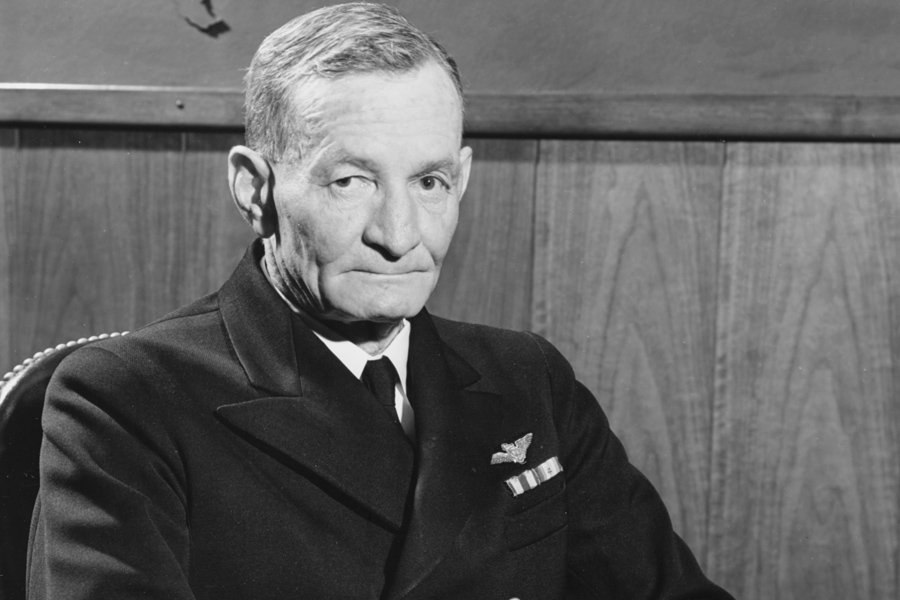
A man shaped by duty
When I look at John S. Mccain Sr., I see a life cut from salt, steel, and discipline. He was born in 1884 in Carroll County, Mississippi, and came of age in a country that was still learning how to project power across oceans. He entered the United States Naval Academy in 1902 and graduated in 1906, stepping into a career that would stretch across the first half of the twentieth century. His path was not a straight ladder. It was more like a long shipboard voyage, with storms, course changes, and sudden bursts of speed.
He began in the old Navy of coal smoke, brass fittings, and slow tradition. Then he helped steer that Navy into the age of aviation and fast carriers. That is what makes him memorable. He was not simply a commander who held a title. He was a builder of modern naval power, a man who understood that the sea had a new sky above it.
Early life and family roots
John S. Mccain Sr. came from a large family with deep roots in the American South. His father was John Sidney McCain, and his mother was Elizabeth Ann Hart Young. He was one of several children, growing up among siblings who also carried the weight of family name and public service.
Among his siblings were William Alexander McCain, Katherine Louise McCain, Mary James McCain, Harry Hart McCain, and Joseph Pinckney McCain. That family circle mattered. It gave him a background of discipline, ambition, and shared identity. William Alexander McCain later became a brigadier general in the U.S. Army, which gives the family tree a striking military branch. In that household, service was not an abstract ideal. It was part of the air they breathed.
I think that kind of upbringing often leaves a mark that never quite fades. It forms a person like pressure forms a pearl. The result is not softness, but strength.
Marriage and children
In 1909, John S. Mccain Sr. married Katherine Davey Vaulx in Colorado Springs. Her father was James Junius Vaulx, an Episcopal clergyman, which adds another layer to the family story. His world was not only military. It also touched religion, education, and public life.
Together, John S. Mccain Sr. and Katherine had three children: John Sidney McCain Jr., James Gordon McCain, and Catherine Vaulx McCain. Of these, John Sidney McCain Jr. became the most visible in public life, rising to become a four star admiral himself. The family tradition did not stop with one generation. It kept moving, like a relay baton passed from hand to hand.
Their son John Sidney McCain Jr. later became the father of John S. McCain III, and through that line the family became known to a much wider public. John S. Mccain Sr. stands at the root of that modern legacy. He is the old trunk from which the later branches grew.
Grandchildren and later generations
John Sidney McCain Jr. made John S. McCain Sr. the grandfather of John S. McCain III, Joseph Pinckney McCain II, and Jean Alexandra McCain (Sandy McCain). Later generations took the name into politics, military, and public memory.
John S. McCain III, the most famous descendant, served in the Navy, survived Vietnam capture, and became a senator. That relationship often overshadows the older generation. However, previous generations mattered too. Family history would without John S. Mccain Sr., its first great naval architect.
He was Meghan McCain’s great-grandfather. That makes him part of a prominent family line from nineteenth-century Mississippi to modern media and politics. The family name has spread, yet his life and service remain stable.
Career and rise in the Navy
John S. Mccain Sr. built his career with patience and force. After graduating from Annapolis, he served in the Navy through a wide range of posts. He worked aboard ships, handled engineering and navigation duties, and later served in Washington in personnel and aviation-related roles. He was the kind of officer who knew the machinery from the inside. Not just engines and flight decks, but also the bureaucratic gears that keep a large institution moving.
One of the most remarkable parts of his life came in 1935 and 1936, when he trained as a naval aviator at about age 50 and earned his wings. That alone is a vivid image. Most men are settling into habit by then. He was taking flight. It feels almost mythic, like a veteran sailor suddenly learning the language of the wind.
He later commanded USS Ranger in 1937, one of the Navy’s early aircraft carriers. During World War II, he took on major responsibilities in the Pacific, including leadership in the South Pacific and later command of fast carrier task forces. He became a key figure in the evolution of carrier warfare, helping shape the Navy’s air power at a time when the ocean battlefield was changing by the month.
War service and achievements
His reputation revolves around his wartime record. He participated in the 1942 South Pacific campaign, where air, sea, and endurance had to operate together under pressure. He led Pacific carrier formations as Task Force 38 and swift carrier groups by 1944 and 1945.
His men attacked Japan, including Tokyo airfields, in the closing stages of the war as the US won. He was at the war machine’s hub. Not a minor thing. It means his judgments and leadership shaped the Pacific conflict’s final months.
His awards and decorations showed his service. His posthumous promotion to admiral in 1949 followed his military honors. He is buried in Arlington National Cemetery among the nation’s greatest military dead. That grave matches his life. His career in the military left him in the nation’s memory.
Personal character and public memory
I find John S. Mccain Sr. compelling because he seems to combine two kinds of strength. One was formal and institutional. He knew how to command, manage, and operate within a great military system. The other was personal, sharper, and more forceful. Some descriptions portray him as energetic, fearless, hotheaded, and direct. That mix can be combustible, but in wartime it can also be effective.
He died in Coronado, California, on September 6, 1945, just after the end of the war. That timing gives his life a strange final note. He lived to see the conflict conclude, but only barely. It is as though he had sailed all the way to the harbor and reached shore with the tide already turning.
Today, his name survives most visibly through family memory, naval history, and the ships and institutions that carried it forward. Yet he deserves attention on his own terms. He was not just a predecessor in a famous family. He was a major naval leader whose life linked the age of coal-fired ships with the era of carrier aviation.
FAQ
Who was John S. Mccain Sr.?
John S. Mccain Sr. was a United States Navy officer who rose to admiral, served in major leadership roles during World War II, and helped shape the development of naval aviation and carrier warfare.
Who were his parents?
His parents were John Sidney McCain and Elizabeth Ann Hart Young.
Who was he married to?
He was married to Katherine Davey Vaulx, whom he wed in 1909 in Colorado Springs.
How many children did he have?
He had three children: John Sidney McCain Jr., James Gordon McCain, and Catherine Vaulx McCain.
What is his connection to John S. McCain III?
John S. McCain Sr. was the grandfather of John S. McCain III through his son, John Sidney McCain Jr.
Was he related to Meghan McCain?
Yes. He was Meghan McCain’s great grandfather.
Why is he important in naval history?
He mattered because he helped guide the Navy into the carrier and aviation age. He trained as a naval aviator later in life, commanded major carrier forces in the Pacific, and played a role in the final operations against Japan during World War II.