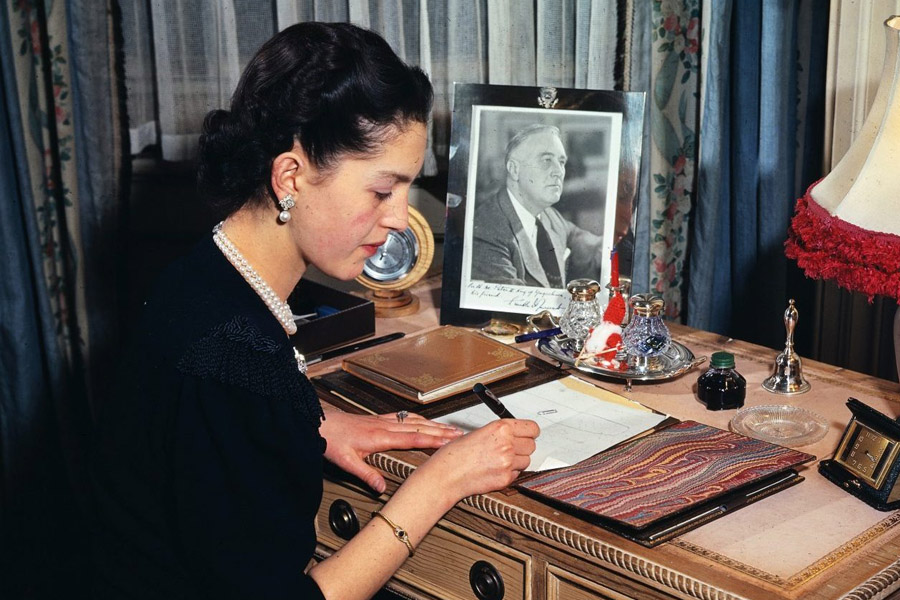
A princess born into history
I see Alexandra Of Yugoslavia as a woman whose life began like a bell ringing in a storm. She was born on 25 March 1921 in Athens, not into calm, but into a royal world already frayed by war, exile, and succession disputes. Her full identity carried more than one crown. She was Princess Alexandra of Greece and Denmark by birth, then later became Queen Alexandra of Yugoslavia through marriage. That double lineage gave her life a rare texture. It was woven from Greek, Danish, Prussian, Serbian, and Yugoslav threads, like an old tapestry that survives because it is made of many strong fibers.
Her father was King Alexander I of Greece, and her mother was Aspasia Manos. Her father died before she was born, which meant Alexandra entered the world as a posthumous child. That detail matters. It shaped the way history first met her, as a daughter arriving after the door had already closed on her father’s life. Her mother, Aspasia, came from a respected Greek family, and Alexandra inherited both the dignity of royalty and the resilience of a woman who had to adapt to circumstance from the beginning.
Her parents and the first family line
I cannot think about Alexandra without starting with her parents, because their story was already unusual before hers began.
Her father, King Alexander I of Greece, was the reigning monarch of Greece at the time of his death. He belonged to the Greek royal house and was also tied by blood to the broader European dynastic network. His death in 1920 made Alexandra fatherless before birth, which gave her life an air of absence from the start. A shadow, yes, but also a kind of inheritance. The missing father became part of the story.
Her mother, Aspasia Manos, was the daughter of Petros Manos and Maria Argyropoulos. She married King Alexander I in a union that was politically and socially complicated, and for a period her status was not fully recognized. Yet she endured, and Alexandra grew up in the atmosphere of that endurance. I think of Aspasia as the bridge between court life and private struggle. She was royal by marriage, but also deeply human in the way she had to persist.
Alexandra’s paternal grandparents were King Constantine I of Greece and Queen Sophia of Prussia. That pair placed her squarely within the great European dynastic web of the early 20th century. Constantine I brought the Greek throne into the family line, while Sophia of Prussia linked Alexandra to the House of Hohenzollern. Through them, Alexandra was not merely Greek. She was a child of continental history.
Her maternal grandparents, Petros Manos and Maria Argyropoulos, grounded her in Greek aristocratic life outside the monarchy. That side of the family mattered too, because it gave her identity depth rather than just rank.
Childhood between courts and exile
Alexandra’s early life moved through the unstable geography of royal existence. When I follow her timeline, I see not a single home but a sequence of rooms, countries, and temporary arrangements. Greece, England, Venice, South Africa, and London all appear in her story. She did not live a rooted life. She lived a mobile one, carried by history like a leaf on fast water.
Her childhood was affected by the restoration and fall of monarchies, by legal recognition of her parents’ marriage, and by the complicated place of women in dynastic systems. She and her mother eventually received formal recognition and titles, but that recognition came after uncertainty. In a family like hers, status was never just status. It was a matter of decree, survival, and memory.
She was educated in England and spent time in royal circles, but the war years changed everything. During the Second World War, she and her mother served as nurses. That detail gives me a vivid picture of Alexandra. She was not a decorative figure pinned to the edge of history. She was a woman willing to work in the middle of disaster. Nursing was not glamour. It was endurance, practical mercy, and long hours under pressure.
Marriage to Peter II of Yugoslavia
Her life changed when she married King Peter II of Yugoslavia in London on March 20, 1944. This was no ordinary wedding. Two exiled royal houses, two young individuals living in war’s diminishing space, merged.
King Alexander I and Queen Maria of Yugoslavia had Peter II. Alexandra joined him in bearing a country in distress. Marrying into the Karađorđević dynasty made her Queen of Yugoslavia in name, but not in a stable palace setting. The planet was unstable from the outset. Throne was slipping.
Their narrative is so striking because it’s a royal story without the sheen. It portrays pageantry yet contains exile, uncertainty, and the pain of interrupted existence. They married in London, distant from their titles’ origin. Like putting a flag in damp sand. The gesture is firm, yet the ground is unstable.
Her child and descendants
Alexandra and Peter II had one child, Crown Prince Alexander, born on 17 July 1945 in London at Claridge’s Hotel. That birth mattered enormously, because it preserved the dynasty in a single living heir. One child, one line, one future carried forward through the fog.
Crown Prince Alexander later became the head of the House of Karađorđević. Through him, Alexandra’s family continued into the next generations. Her grandchildren include Prince Peter, Hereditary Prince Philip, and Prince Alexander. Her great-grandchildren extend the line further still, including Prince Stefan and Princess Marija. In family terms, Alexandra’s life became a bridge. She linked the old monarchy to the living family that still carries its memory today.
I think that is one of her greatest legacies. Not money, not land, not power, but continuity. A single thread kept from breaking.
Personal struggles, writing, and later life
Exile and poverty affected Alexandra’s life after Yugoslavia’s demise. The royal family lost most of monarchy’s protection. Under duress, she and Peter II turned royalty into hard work. She sold jewelry, moved often, and struggled financially. Reality removes satin and leaves seam. It displays dynastic collapse costs.
She started writing. In 1956 and 1960, she wrote For Love of a King and Prince Philip: A Family Portrait. Her attempts to sculpt memory with her hands are important. Writing gave her a voice beyond title. It preserved her experience, family, and identity in a world that had forgotten her.
Her final years were quieter and harder. In 1970, Peter II died. In 1972, her mother died. Alexandra became increasingly alone, but her family memories remained. Her remains were first buried in Greece in 1993 and then in Oplenac in 2013. Her narrative resumed amid the Balkans’ regal landscape.
Family members at a glance
| Family member | Relationship | Brief identity |
|---|---|---|
| King Alexander I of Greece | Father | Greek king, died before Alexandra was born |
| Aspasia Manos | Mother | Greek noblewoman, later Princess Aspasia of Greece and Denmark |
| King Constantine I of Greece | Paternal grandfather | Greek monarch, part of the Hellenic royal house |
| Queen Sophia of Prussia | Paternal grandmother | Greek queen and Prussian princess |
| Petros Manos | Maternal grandfather | Greek colonel and aristocrat |
| Maria Argyropoulos | Maternal grandmother | Mother of Aspasia Manos |
| Peter II of Yugoslavia | Husband | Last king of Yugoslavia |
| Crown Prince Alexander | Son | Only child of Alexandra and Peter II |
| Prince Peter | Grandson | Son of Crown Prince Alexander |
| Hereditary Prince Philip | Grandson | Son of Crown Prince Alexander |
| Prince Alexander | Grandson | Son of Crown Prince Alexander |
FAQ
Who was Alexandra Of Yugoslavia?
Alexandra Of Yugoslavia was the last Queen of Yugoslavia, born Princess Alexandra of Greece and Denmark. She was a royal by birth and marriage, and her life connected the Greek, Danish, and Yugoslav dynasties.
Who were Alexandra Of Yugoslavia’s parents?
Her father was King Alexander I of Greece, and her mother was Aspasia Manos. Her father died before her birth, which made her a posthumous child.
Who was Alexandra Of Yugoslavia married to?
She was married to King Peter II of Yugoslavia. Their wedding took place in London in 1944 during World War II.
Did Alexandra Of Yugoslavia have children?
Yes, she had one child, Crown Prince Alexander. He later became the head of the House of Karađorđević.
What made Alexandra Of Yugoslavia’s life notable?
Her life was notable for its royal connections, exile, wartime nursing, marriage to the last King of Yugoslavia, motherhood, and her later efforts to preserve family memory through writing.
What happened to Alexandra Of Yugoslavia later in life?
She lived much of her life in exile, faced financial hardship, wrote memoir-related works, and died in England in 1993. Her remains were later moved to Serbia in 2013.
Why is Alexandra Of Yugoslavia still remembered?
I think she is remembered because her life carried the weight of a vanished monarchy, yet she remained visible through family, writing, and historical memory. She is part of a lineage that still reaches into the present, like an old river that keeps finding its way forward.