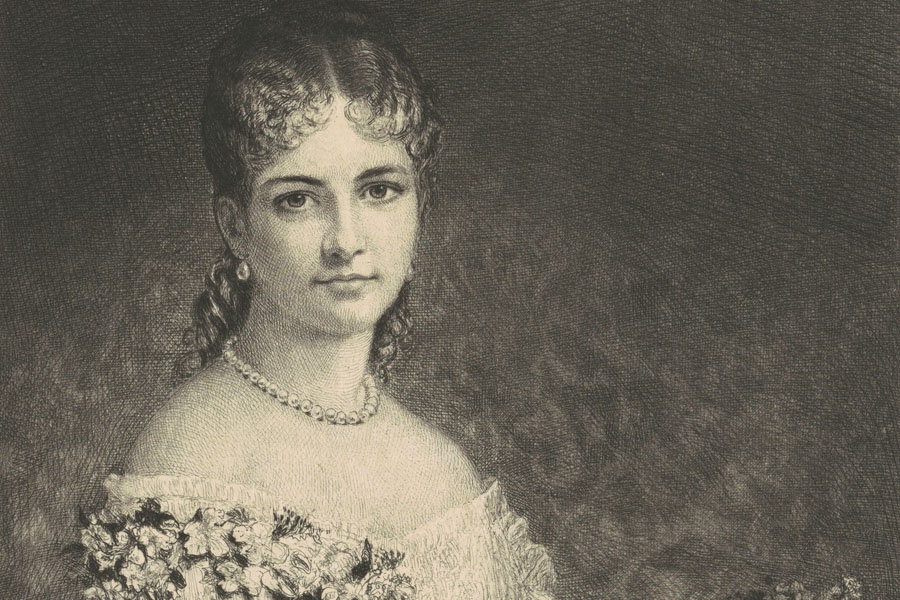
Early life and parents: Caroline Schermerhorn Astor and William Backhouse Astor Jr.
I was attracted by fortress-like families as a child. The Astors were a fortress. Charlotte was raised in a household where manners was money and the drawing room was a power center. Mrs. Astor, her mother, ruled New York after 1870. Her father controlled property, money, and the American need to leave a legacy.
In numbers: Charlotte was born 1858. She was one of five children in a wealthy Manhattan family with dozens of plots and a name that might open doors in London and Paris. I envision a tiny girl wandering over marble corridors and a lady developing into a public role she never wanted but could not leave.
Marriage, scandal, and second life: J. Coleman Drayton and George Ogilvy Haig
J. Coleman Drayton married Charlotte in 1879. The marriage brought children, social invitations, and headlines. Rumors, harsh gossip, and public scrutiny weakened the union by the early 1890s. In that period, divorce broke reputations almost as cleanly as legal connections. The 1896 divorce was not a private failure. The argument was screamed across drawing rooms and printed in large columns.
A second act ensued. She married again in December 1896 to a Scot and a British family. The Atlantic crossing was both exile and emancipation. Mom kept her kids close. She appeared when needed. She adjusted to love and notoriety.
Siblings and public tragedy: John Jacob Astor IV
Charlotte’s family was large and public. Her brother John Jacob died in 1912 on the Titanic, a number that carries weight even now: 1,517 lives lost, including titans of industry. I do not write those numbers lightly. When such a calamity touches a family like the Astors, it reveals the porousness of privilege. The family name could not buy immunity from fate.
The siblings were not just names on a pedigree. They were actors, patrons, keepers of fortunes. The loss in 1912 altered the Astor household ledger and its private grief. I think of the way personal catastrophes reroute public narratives.
Children and descendants: Caroline Astor Drayton, Henry Coleman Drayton, William Astor Drayton, Alida Livingston Drayton
Family trees are like gardens where some branches flourish and others wither. Charlotte had four children. One became a diplomat’s spouse. One navigated the complicated expectations of wealth. One died young. Dates matter here because they anchor small lives to large moments.
| Child | Year born | Notable fact |
|---|---|---|
| Caroline Astor Drayton | 1880 | Married into diplomatic circles |
| Henry Coleman Drayton | 1883 | Carried the Drayton name forward |
| William Astor Drayton | 1888 | Lived into the 20th century |
| Alida Livingston Drayton | 1890 | Died in childhood, 1898 |
When I read such a table, I am struck by the ordinary heartbreak hidden behind the velvet curtain of high society. A child lost at eight is a grief that no trust fund can fund away.
A timeline in brief
- 1858: Charlotte is born.
- 1879: She marries J. Coleman Drayton.
- 1880 to 1890: Four children are born.
- 1892 to 1896: Public scandal and divorce unfold.
- December 1896: She marries George Haig and relocates to Britain.
- 1905: Her second husband dies.
- 1912: Her brother dies aboard the Titanic.
- 1920: Charlotte dies in Paris.
Timelines are scaffolds for memory. They keep facts upright while stories climb around them.
What she managed and what she inherited
I purposefully avoid calling Charlotte a businesswoman because her era had rigid tabs for what women could do and what they could own. Yet she managed households, fortunes in trust for her children, and reputations. At least one of her siblings made public gifts and settlements that reshaped who received what. The estate details read like arithmetic of affection and exclusion: annuities for servants, trusts for children, strings that tied money to manners.
She inherited influence as easily as she inherited expectations. Influence is a ledger with invisible entries.
Style, public image, and private repairs
I imagine her in gas-lit and later electric rooms, alternating between rebellion and reverence. Her mom codified social norms. Charlotte learned to advance and retreat. After scandal, she moved to London and Paris for a tranquil life. It’s not defeat. Recalibration.
Chapters of her life reveal her upbringing, marriage, rupture, remarriage, and loss. The protagonist lacks modern heroism. She’s human. She perseveres.
FAQ
Who was Charlotte Augusta Astor in one sentence?
I would say she was a Gilded Age socialite born in 1858 who navigated vast wealth, public scandal, two marriages, and transatlantic life until her death in 1920.
How many times did she marry and who were her husbands?
She married twice. First to J. Coleman Drayton in 1879, with whom she had four children. Second to George Ogilvy Haig in December 1896, a marriage that relocated her to Britain.
Which of her relatives are historically prominent?
Her mother set society rules in New York. Her brother John Jacob Astor IV died on the Titanic in 1912. The Astor name itself has been a measure of American urban power for generations.
Did Charlotte have a formal career?
No. Her public life was social and familial management. She handled households, arranged marriages, protected children, and negotiated the financial settlements that wealth and scandal required.
What are the key dates to remember about her life?
1858 birth, 1879 first marriage, 1896 divorce and second marriage, 1912 Titanic family loss, 1920 death in Paris.
Are there surviving descendants?
Yes. At least three children reached adulthood and carried marriages and lives into the 20th century, extending lines of family influence and obligation.
Where did she die?
She died in Paris in 1920, having spent significant parts of her later life in London and on the continent.
Why does her story matter to me?
Her life condenses a century of social change into a single biography. It shows how money and manners can shape opportunity, and how private choices can explode into public stories. I find in her life a human scale to history.